

 Blog details
If the web cuts out, cloud tools slow down, or a routine update sparks chaos, something in the setup requires fixing. IT infrastructure services that support technology operations maintain steady performance for messaging, workplace software, wireless networks, phone systems, data sharing, and protection measures, while allowing employees to stay productive. Yet stability often depends on unseen layers most overlook until they fail.
A growing number of LA-based teams now rely on Titan Elite to shape systems that evolve alongside their expansion. Security forms a core part of every setup, built in from the start rather than added later. Hybrid workflows receive focused attention, ensuring smooth daily operations across locations. Infrastructure stays flexible, adapting without disruption when demands shift.
What “IT infrastructure” Includes
IT infrastructure is the stack that delivers day-to-day IT operations: hardware, software, networks, and the services that keep everything running. In practice, it includes:
- Network, meaning internet, firewalls, switches, wireless, VPN/SASE
- Footprint of data depends on hardware setups, whether inside company walls or online. Virtual environments split resources efficiently across tasks. Retaining information happens through dedicated devices designed for safe keeping. Copies made regularly protect against loss. Moreover, location choice shapes access speed plus reliability
- Endpoints, meaning laptops/desktops, mobile devices, patching, encryption, EDR
- Authentication relies on Microsoft Entra ID alongside legacy Active Directory systems. Where needed, multi-factor authentication adds another verification layer after initial login attempts. Single sign-on enables entry to multiple apps using one set of credentials. Access permissions are assigned based on roles within the organization. Security policies define who can view or edit specific resources
- Operations, in other words monitoring, documentation, change control, vendor management
What IT Infrastructure Services Cover
Effective IT infrastructure services combine engineering (building and improving) with operations (keeping it stable). Here’s what that looks like:
1) Network & connectivity management
A solid network begins with speed and consistency, like firewalls matched to demand, clear separation of systems, stable wireless access, while oversight spots internet provider problems before they grow. When disruptions occur, response relies on backup routing, structured alerts, and collaboration with service providers.
2) Server, storage, and cloud platform support
A solid foundation comes from dependable computing and storage, whether local, online, or a mix of both. Keeping systems updated, fine-tuned, and properly sized helps avoid major outages when minor adjustments occur. Oversight across the full lifespan of hardware supports consistent operation behind the scenes.
3) Endpoint and device operations
Following setup, security focuses on each device accessing corporate information. Automation handles updates, while encryption safeguards content. Compliance checks run by default, ensuring standards are met without delays. Support responds quickly when issues arise. This approach minimizes interruptions. Risk steadily declines over time.
4) Identity and access management
At the heart of today’s IT systems lies identity management. A properly set up Microsoft Entra ID allows enforcement of multi-factor authentication, conditional access rules, and seamless logins without adding friction for people using the system.
Proactive vs. Break-fix: where the ROI lives
Break-fix reacts to problems, on the other hand, proactive infrastructure management prevents them.
Consistency in setup, combined with ongoing monitoring, leads to fewer unexpected failures. Troubleshooting takes less time when configurations are uniform. Predictable replacement schedules simplify financial planning. Instead of dreading expenses, technology becomes something manageable, like part of a steady workflow rather than a source of stress.

Security Belongs In Your Infrastructure, Not Next To It
Attackers target identity, endpoints, and misconfigurations. So infrastructure services must include security by default.
Two frameworks help you structure that work:
- NIST Cybersecurity Framework (CSF) 2.0 organizes outcomes into Govern, Identify, Protect, Detect, Respond, and Recover—so you build a repeatable program instead of chasing alerts.
- CIS Critical Security Controls provide a prioritized set of safeguards (asset inventory, secure configuration, vulnerability management, log management) that map well to MSP operations.
A strong provider bakes these controls into patching, admin access, backups, MFA, logging, and configuration management.
Hybrid and Cloud IT infrastructure Services: Keep Flexibility Without the Chaos
For many Los Angeles companies, operations rely on a blend of tools. Microsoft 365 sits alongside several SaaS apps, meanwhile computing happens across local servers, cloud systems, or sometimes both. Success in such setups comes not by accident, but through deliberate planning
- pick a clear identity strategy,
- Start by pinpointing the location of stored information
- standardize backups and restore testing,
- Gain oversight while limiting uncontrolled expansion through clear monitoring and defined boundaries.
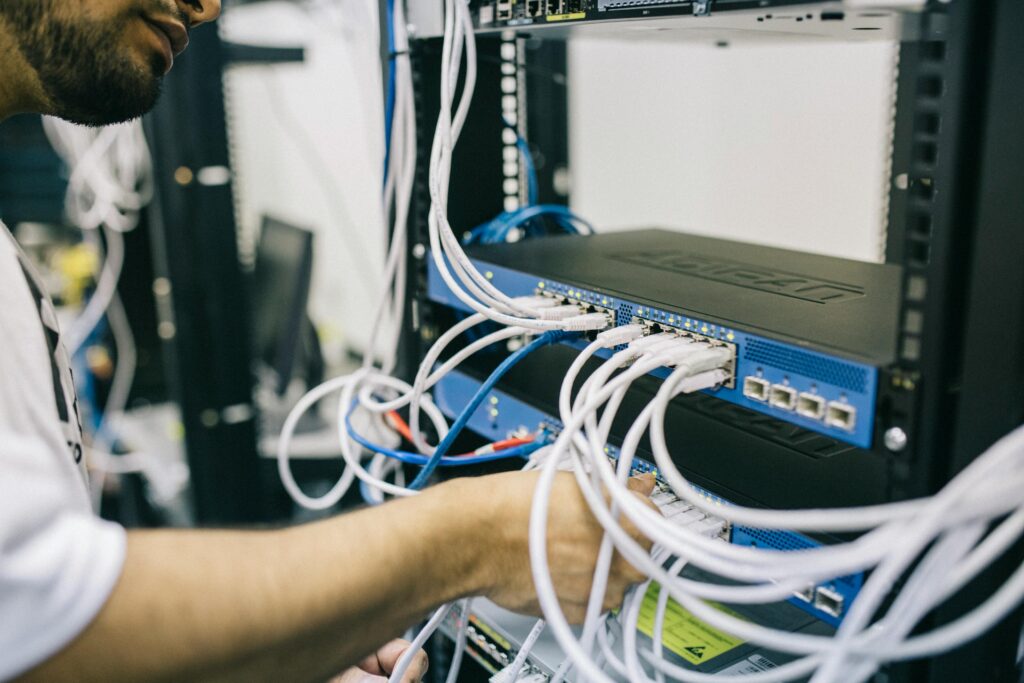
What Mature IT Infrastructure Services Look Like at Titan Elite
Every MSP says they “manage infrastructure.” The difference shows up in the process.
With Titan Elite, clients typically get:
- clear documentation (assets, network, vendors, admin access),
- Uniform benchmarks cover updates, system settings, protection measures
- Keeping track while staying responsible. You’re never just setting and leaving things behind
- A clear plan links technology upgrades directly to company goals.
Choosing an IT Infrastructure Services Provider in Los Angeles
Before you sign, ask:
- How much stays unchanged while the rest gets standardized? What remains untouched, even as systems align?
- Starting fresh, what approach works for managing access and multi-factor checks right away?
- Are backup processes checked on a routine basis? Is restoration tested at regular intervals?
- What happens during an outage? Who owns vendor escalation?
- Provide some samples of records and summaries.
- What steps ensure safe administrative access while allowing proper review?
If a provider answers vaguely, they will operate vaguely.